

Mosquito virus threat
Infected mosquitos are spreading the deadly Usutu virus to blackbirds, across the UK.
The Blackbird is one of the most common of our UK birds whose bird song, is widely appreciated and enjoyed.
Key Blackbird features
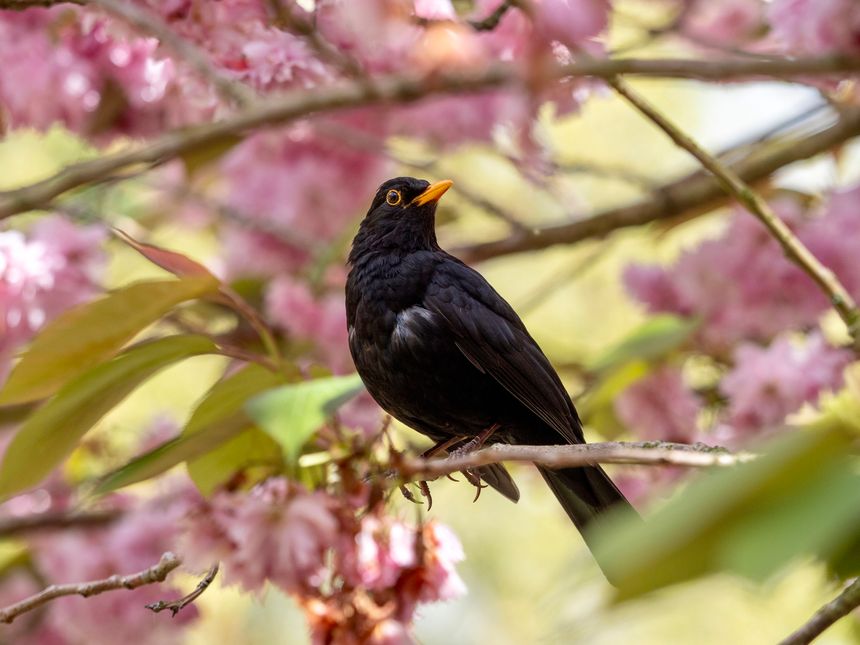
Male Blackbirds are black all over, except for their bright orange-yellow beak, yellow eye-ring and brown legs.
Female Blackbirds are brown, often with spots and streaks on their breasts/front also; they have a brown beak and legs.
Where to find them?
Your local park
hedgerows
woodland
coastal scrubland
farmland
our back gardens
Blackbirds are not found at higher elevations or in the upper portions of mountains.
Conservation status
With over 5 million blackbird pairs breeding (throughout the year) across the UK, blackbirds are very common and not at risk.
Diet
Blackbirds consume a variety of insects and worms, but they also eat berries and fruit, when they are in season and available.
Blackbirds consume a variety of insects and worms, but they also eat berries and fruit, when they are in season and available.
/Passle/65fc03da1a090513208c499c/SearchServiceImages/2026-07-17-10-32-50-449-6a5a04d2d6489647393ce7a9.jpg)
/Passle/65fc03da1a090513208c499c/SearchServiceImages/2026-06-01-16-44-20-967-6a1db6e4e92bb197fc3e6a1f.jpg)
/Passle/65fc03da1a090513208c499c/SearchServiceImages/2026-05-12-15-09-30-448-6a0342aa5e55019e048c2ec7.jpg)